Industrial projects demand durable, load-bearing, and precisely engineered solar structures. Whether it is a manufacturing plant, warehouse rooftop, industrial estate, or ground-mounted solar installation, selecting the right solar mounting structure is crucial for performance and safety.
A solar structure is not just a support frame; it determines panel stability, energy output efficiency, and long-term durability.
Why Solar Structure Selection Matters
Industrial environments often face:
- High wind pressure
- Heavy rainfall
- Dust and chemical exposure
- Large-scale panel installations
An improperly designed solar mounting structure can lead to reduced energy output, maintenance issues, or structural failure.
Choosing the right solar structure manufacturer ensures engineering-based design rather than generic fabrication.
Types of Solar Structures for Industrial Projects
Industrial solar installations typically use one of the following:
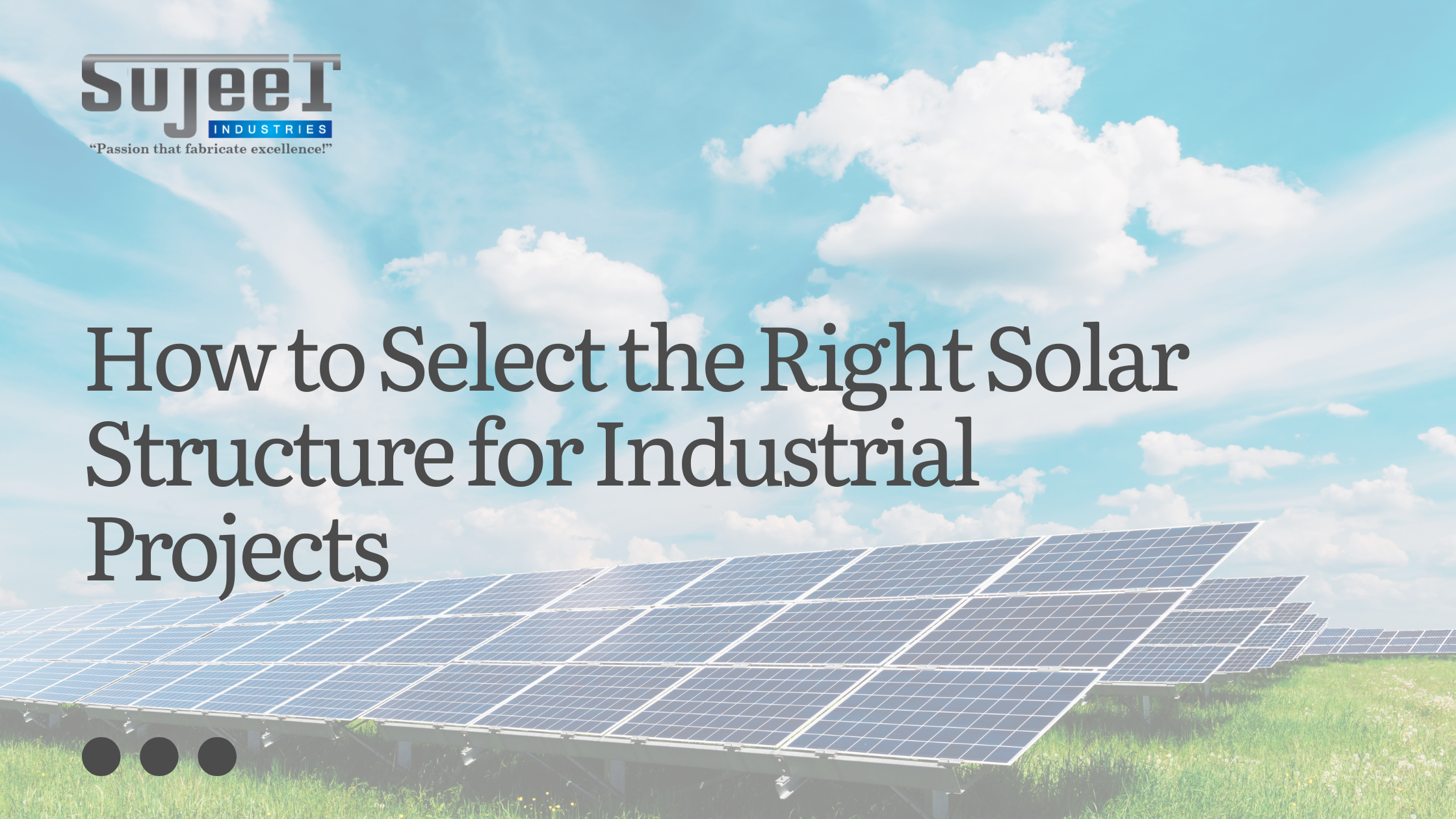
Ground-Mounted Solar Structures
Suitable for large industrial campuses with open land. These structures are engineered with foundation systems designed to withstand wind loads and soil conditions.
Rooftop Solar Mounting Structures
Used in factories and warehouses. Design must consider roof load capacity and tilt angle for maximum solar exposure.
Elevated Solar Structures
Installed above parking areas or industrial yards. These require strong steel fabrication and structural load calculation.
Key Factors in Selecting the Right Solar Structure
When evaluating solar mounting structures for industrial use, consider:
Load Calculation & Wind Zone
Industrial solar structures must be designed according to local wind zone classifications. Proper structural analysis ensures safety.
Material Quality
High-grade steel with hot dip galvanizing provides corrosion resistance, especially in chemical or coastal zones.
Tilt Angle Optimization
Correct panel inclination improves solar energy absorption and overall system efficiency.
Foundation Design
Ground-mounted systems require soil testing and foundation engineering to ensure long-term stability.
Scalability
Industrial projects often expand. The structure should allow future extension without redesigning the entire system.
Cost Considerations
The cost of a solar structure depends on:
- Steel grade and thickness
- Galvanizing quality
- Type of installation (ground or rooftop)
- Project size
- Wind load requirement
While lower-cost structures may seem attractive initially, durability and corrosion protection determine long-term savings.
Sujeet Industries – Solar Structure Manufacturing Expertise
Sujeet Industries designs and manufactures solar mounting structures tailored for industrial and infrastructure projects. With strong capabilities in structural steel fabrication and galvanizing, the company ensures durability, precision, and load-bearing stability.
From rooftop systems to ground-mounted industrial solar solutions, each structure is engineered for performance and long operational life.
Conclusion
Selecting the right solar structure for industrial projects requires technical understanding and engineering precision. Proper load calculation, material quality, galvanizing standards, and foundation design all play a vital role in system performance.
Working with an experienced solar structure manufacturer ensures structural reliability, safety compliance, and long-term energy efficiency.