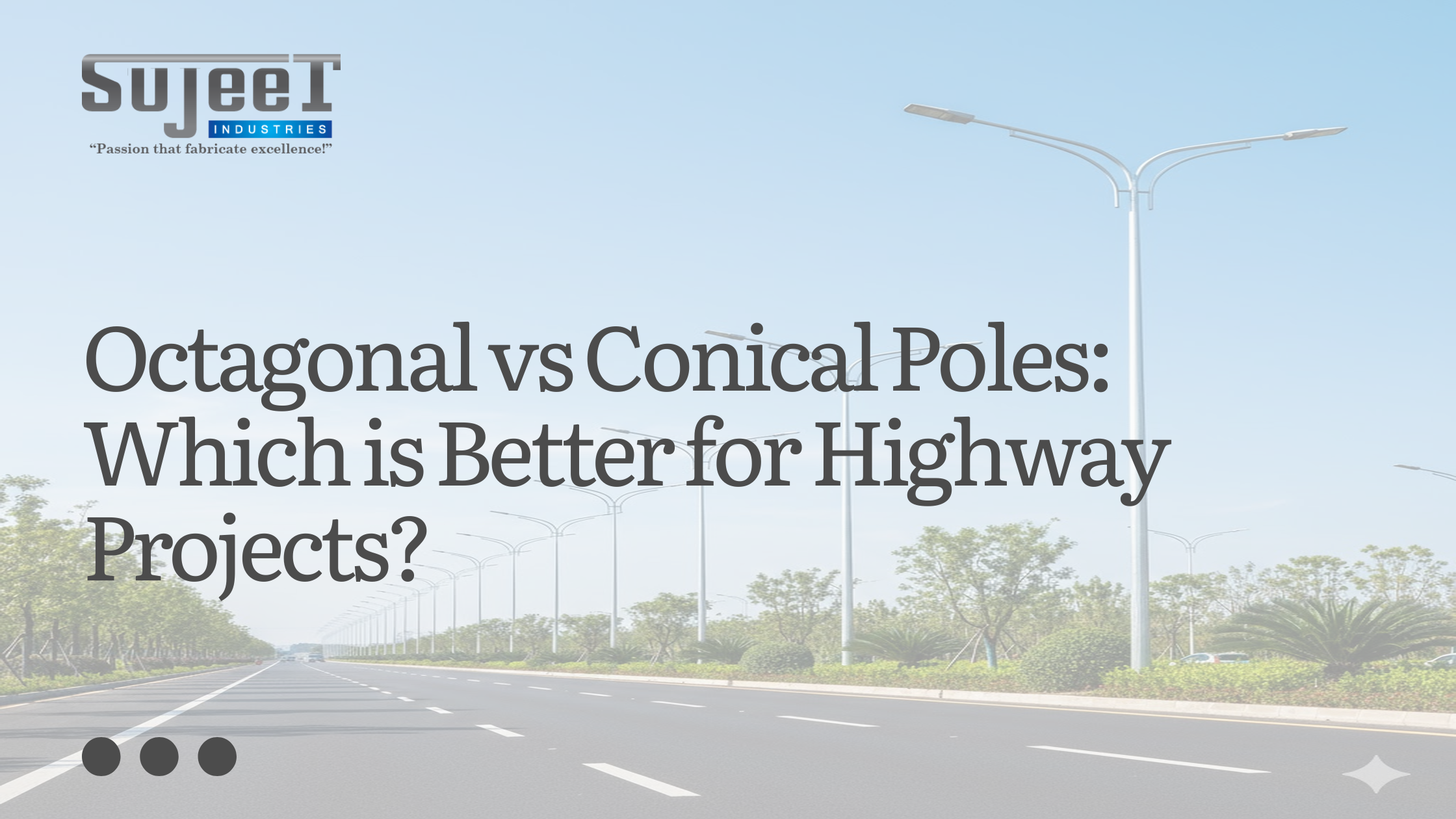
Highway lighting plays a critical role in road safety, visibility, and long-term infrastructure performance. Selecting the right lighting pole is not just a structural decision; it directly impacts wind resistance, durability, maintenance cost, and overall project lifespan. Among the most commonly used options in highway infrastructure are octagonal poles and conical poles.
If you are evaluating pole manufacturers for a highway project, understanding the difference between octagonal and conical poles will help you choose the right solution.
Understanding Octagonal Poles
Octagonal poles are manufactured using high-strength steel plates that are bent and welded into an eight-sided structure. This design enhances structural stability and distributes wind load evenly across the surface.
For highway projects, octagonal poles are widely preferred because they offer:
- Superior wind resistance in open highway zones
- Strong base diameter for high-load applications
- Better structural rigidity at greater heights
- Long service life when hot dip galvanized
Highways are typically exposed to strong crosswinds, heavy vehicle turbulence, and open terrain conditions. The octagonal shape reduces stress concentration and provides enhanced torsional strength. This makes octagonal poles highly suitable for high-speed road corridors and expressways.
Most highway projects use octagonal poles ranging from 9 meters to 16 meters, depending on illumination requirements and road width.
Understanding Conical Poles
Conical poles are tapered circular steel poles designed with a smooth, aesthetic finish. They are popular in urban landscapes and premium streetscape projects.
While conical poles also offer good structural stability, they are generally selected for:
- Urban roads
- Smart city streets
- Architectural lighting
- Township developments
Conical poles are engineered to withstand standard wind loads but may not offer the same structural rigidity as octagonal poles in extreme highway conditions. However, for highways passing through urban zones or landscaped corridors, conical poles provide both performance and visual appeal.
Structural Comparison for Highway Projects
When comparing octagonal vs conical poles for highways, consider these technical factors:
Wind Load Resistance
Highway areas fall under higher wind exposure categories. Octagonal poles typically perform better due to their geometric strength and thicker base sections.
Height & Load Capacity
Highway lighting often requires taller poles to ensure wider light distribution. Octagonal poles are commonly engineered for higher load-bearing capacity, especially when supporting double-arm brackets or solar panels.
Maintenance & Durability
Both pole types are hot dip galvanized for corrosion resistance. However, octagonal poles are generally preferred for long highway stretches where durability is critical.
Aesthetic Consideration
If the highway passes through urban or commercial areas, conical poles may be chosen for their sleek appearance.
Which is Better for Highway Projects?
For major highways, expressways, and industrial corridors, octagonal poles are usually the better option due to their superior structural performance and wind resistance.
Conical poles are suitable for controlled urban highway environments where aesthetics play an important role.
The final decision should always be based on:
- Wind zone classification
- Soil condition
- Pole height requirement
- Luminaire load
- Project design specifications
Choosing a reliable pole manufacturer ensures proper structural calculation and compliance with safety standards.
Sujeet Industries – Engineering Durable Pole Solutions
Sujeet Industries manufactures both octagonal and conical poles designed for highway and infrastructure applications. With in-house fabrication and hot dip galvanizing capabilities, each pole is engineered for strength, precision, and long-term durability.
From expressways to urban lighting projects, the focus remains on structural reliability and consistent performance.